
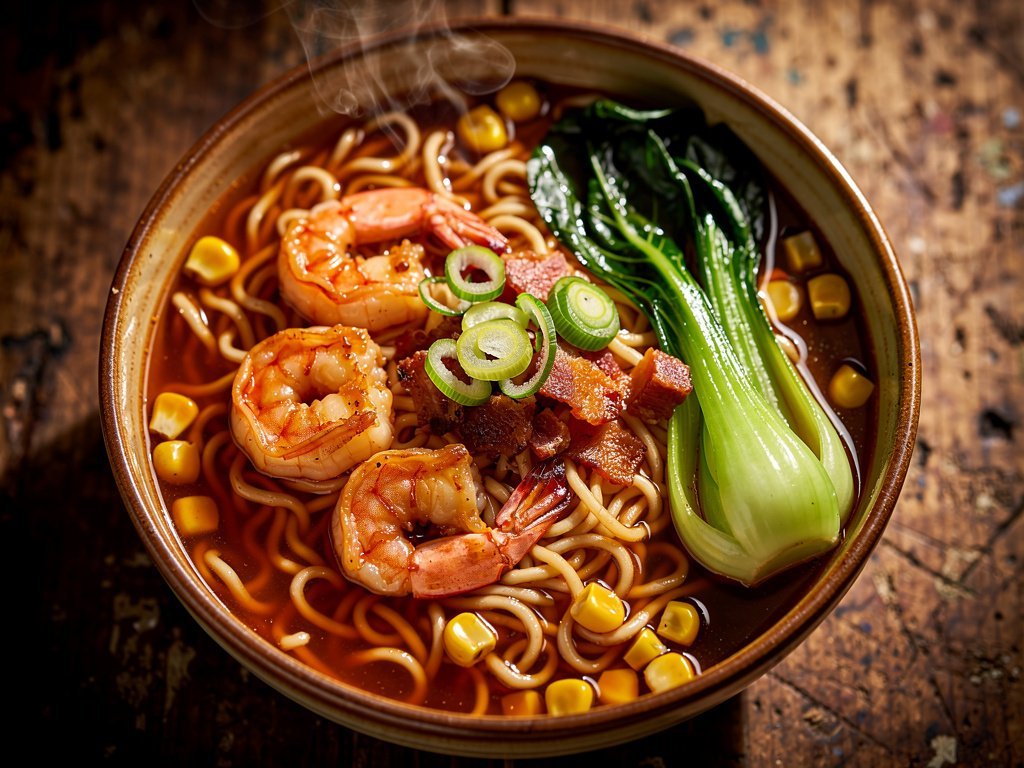
This ramen bowl is all about big, bold flavors. A rich broth made with miso and gochujang provides a spicy, umami-packed base, while tender shrimp glazed in sesame and crispy bacon add irresistible texture. Bok choy, napa cabbage and sweet corn bring freshness and crunch.
Perfect for a cozy night in, this recipe makes enough for seconds-so you can share with a friend or save some for later. The combination of savory, spicy and nutty notes will warm you from the inside out.
Log in to save recipes and build weekly shopping lists.
Recipe details
Nutrition per serving
Dietary labels
Allergen check
Values are calculated per serving from ingredient amounts and the ingredient nutrition reference per 100g. Allergen and diet labels use available ingredient metadata and name matching; always check product labels for strict diets or allergies. Some ingredient amounts or nutrition values were incomplete, so this is marked as a partial estimate.
Ingredients







Instructions
- Bring a large pot of salted water to a boil. Meanwhile, trim and thinly slice scallions, separating white and green parts. Peel and mince garlic. Peel and grate ginger. Drain corn.
- Once water is boiling, add ramen noodles. Cook, stirring occasionally, until just tender, 1-2 minutes. Drain and rinse under cold water for 30 seconds. Toss with a drizzle of cooking oil to prevent sticking. Set aside.
- Slice bacon crosswise into ¼-inch pieces. Return the empty noodle pot to medium-high heat. Add bacon in an even layer and cook, stirring occasionally, until crispy, 5-8 minutes. Transfer bacon to a paper-towel-lined plate. Discard all but a thin layer of bacon fat from the pot.
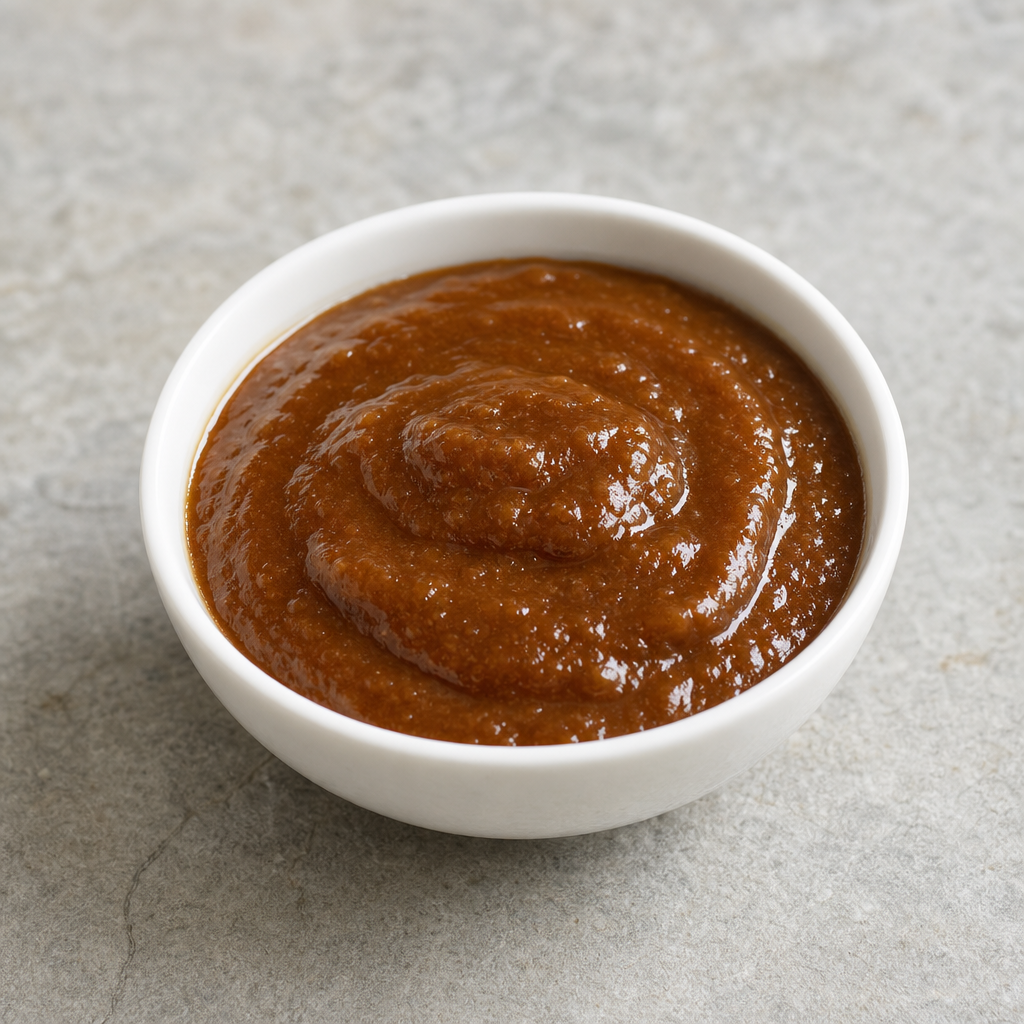
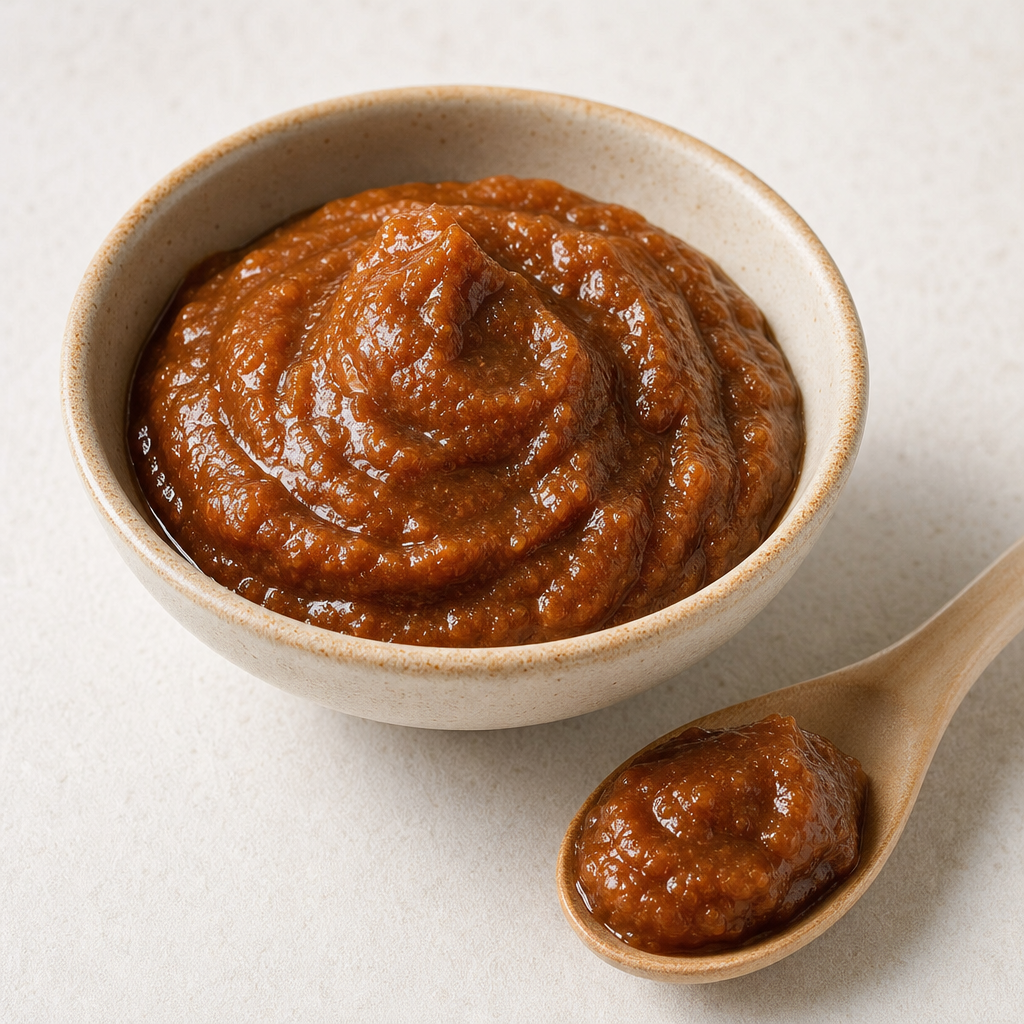
- Heat the pot with reserved bacon fat over medium-high heat. Add scallion whites, garlic and ginger. Cook, stirring, until fragrant, about 30 seconds. Stir in 3 cups water, pork ramen stock concentrates, soy sauce, gochujang and half of the miso sauce concentrates. Scrape up any browned bits from the bottom. Bring to a boil, then reduce heat to low. Add bok choy and napa cabbage and half the corn. Cover and simmer until ready to serve.
- Rinse shrimp and pat dry. Season with salt and pepper. Heat sesame oil in a large pan over medium-high heat. Add shrimp and cook, stirring occasionally, until mostly opaque, 2-3 minutes. Add remaining miso sauce concentrates and cook, stirring, until shrimp are glazed and cooked through, 1-2 minutes more.
- Once bacon is cool, roughly chop. Stir butter and 1 teaspoon rice wine vinegar into the soup pot. Divide half the noodles between bowls. Ladle vegetables and half the broth over noodles. Top with shrimp, bacon and scallion greens. Serve with remaining noodles and broth on the side.
Recipe Tips
For extra flavor, scrape up browned bits from the bottom of the pot when adding the broth-they add depth.
Rinse the cooked noodles under cold water to stop cooking and remove excess starch.
Adjust the spice level by adding more or less gochujang.
FAQ
Can I use a different protein instead of shrimp?
Yes, you can substitute the shrimp with chicken, tofu or pork. Adjust cooking time accordingly.
What can I use instead of gochujang?
You can substitute gochujang with sriracha or chili paste mixed with a little sugar, but the flavor will be different.
How do I store leftovers?
Store noodles and broth separately in airtight containers in the refrigerator for up to 3 days. Reheat broth and pour over noodles.







Recipe comments
0 DandyRecipes comments
Log in to comment on this recipe.
No DandyRecipes comments yet.